
Commercial Sign Installation: Access and Out-of-Hours Work
The sign may be made in a workshop, but installation success depends on the site: access, working hours, pedestrians, vehicles, permits, electrics and the condition of the fixing surface.
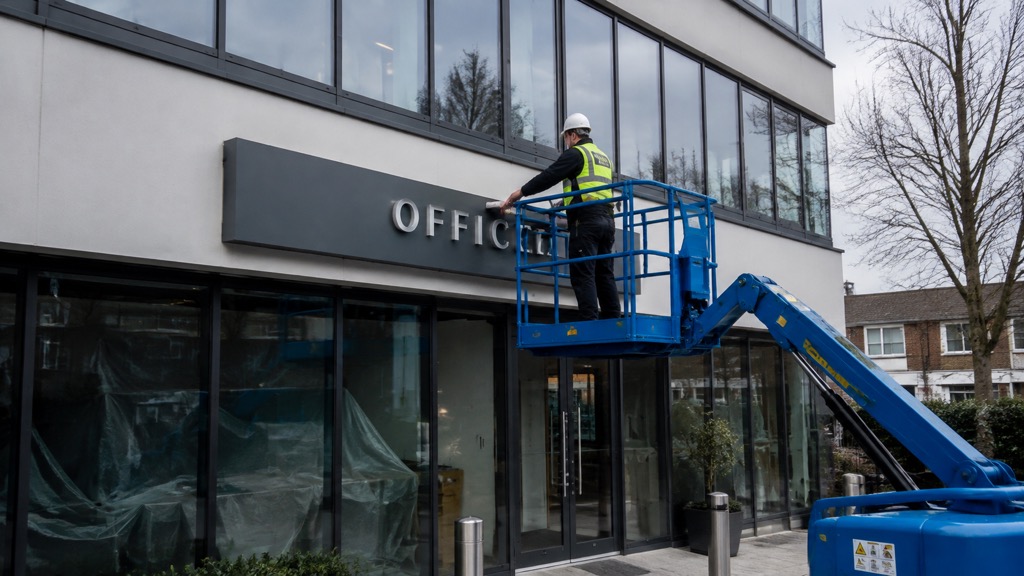
Commercial sign installation depends on safe access, working hours, permits, electrics and the fixing surface.
Plan installation during the survey. Confirm who controls the site, when work is permitted, what access equipment is needed, how the area will be protected and whether power isolation, permits or specialist inductions are required.
Out-of-hours work can reduce disruption, but it adds security, lighting, noise and building-access considerations. It should be planned rather than assumed.
A clear method and sequence protects staff, visitors, installers and the finished sign. It also makes the quotation more reliable because major access costs are identified early.
We look forward to hearing from you
Clear information, suitable materials and a site-led installation plan make commercial signage work harder for longer.
The commercial decision
How to plan commercial sign installation around access equipment, pedestrians, electrics, permits and out-of-hours working.
Turn site information into an installation plan
The survey should record height, reach, ground conditions, loading limits, door widths, parking, delivery routes and overhead or underground hazards. Photographs alone may not show whether a platform can be positioned safely.
Busy entrances may require barriers, a banksman or a phased installation. Work near roads, service yards or public footways can involve additional permissions and traffic or pedestrian management.
Electrical signs need a confirmed supply and isolation arrangement. The sign installer and electrician should agree connection points, cable routes and responsibility for testing and certification.
Out-of-hours fitting can suit shops, offices, schools and healthcare sites, but keys, alarms, security contacts and noise restrictions must be documented. Emergency contact details should be available to the site team.
Before leaving, the installation should be checked, photographed and handed over. Any snags, access restrictions or maintenance points should be recorded rather than left as verbal notes.
Information installers need before arrival
Access equipment
Confirm height, outreach, ground conditions, internal routes and platform or scaffold requirements.
Site control
Identify permits, inductions, escorts, barriers, parking and delivery restrictions.
Electrical responsibility
Agree isolation, power supplies, testing and the boundary between sign and electrical work.
Working hours
Record opening times, quiet periods, alarm procedures and out-of-hours contacts.
Plan your signage project
Tell us the site, required result, approximate size and any access or programme constraints. We will confirm what needs a survey before recommending a specification.
Get an EstimateCommon questions
Often, yes, when the work area can be separated safely and disruption is acceptable. Some entrances require a quieter period.
The quotation should state this clearly. The installer may arrange it, or a client site may provide approved equipment under agreed conditions.
Electrical responsibilities depend on the existing supply and scope. Confirm connection, isolation and testing before installation.
Work may need to pause while fixings or the sign detail are reviewed. Good surveys reduce this risk but concealed conditions can still arise.