
Cut Vinyl Lettering Cost Guide
Practical guidance from the team that surveys, makes and installs commercial signage. If you have a live project, we can help you choose the right route.
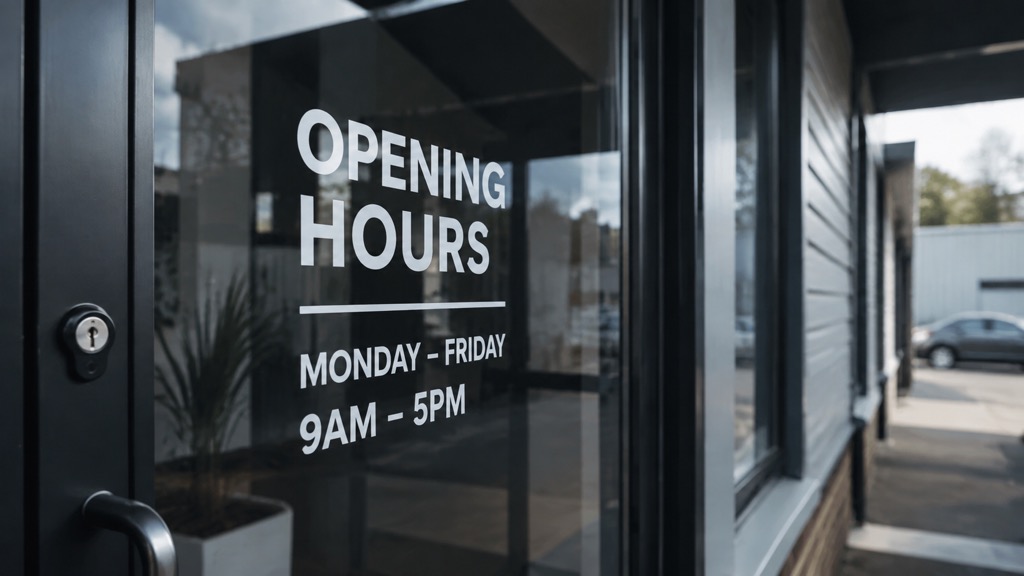
Cut vinyl lettering is often the most cost-effective way to add text or a simple logo to glass, walls or vehicles, since there is no printing involved, just the vinyl cut to the shape of the letters themselves. It works particularly well where a clean, simple message is all that is needed, such as opening hours on a door or a company name on a window, without the cost of a more elaborate sign. This guide covers what affects the price and where cut vinyl is the right choice. We produce and apply cut vinyl lettering for businesses across Hertfordshire, Bedfordshire, Buckinghamshire, Cambridgeshire and London.
We look forward to hearing from you
Cost is driven mainly by the height and quantity of lettering and the complexity of the font (a simple sans-serif cuts more easily than an intricate script), plus the surface it is going onto, since curved or textured surfaces take longer to apply cleanly than flat glass or a flat wall.
What affects the price
Cost is driven mainly by the height and quantity of lettering and the complexity of the font (a simple sans-serif cuts more easily than an intricate script), plus the surface it is going onto, since curved or textured surfaces take longer to apply cleanly than flat glass or a flat wall.
Ready when you are
Need cut vinyl lettering for a window, wall or vehicle? Use the form above to tell us about the project, or get a fixed estimate directly.
Get an EstimateCommon questions
Yes, though each colour is cut and applied as a separate layer of vinyl, which adds some cost and application time compared with a single colour.
Quality cast vinyl typically lasts five or more years outdoors, depending on sun exposure and surface orientation.
Yes, in most cases, though very old vinyl or poor quality surfaces can make removal more difficult.
Yes, vinyl conforms well to gentle curves such as vehicle panels, though very tight curves need careful application.
Yes, provided the logo is a simple enough shape to cut cleanly; highly detailed logos with fine gradients are better suited to printed vinyl.