
Frosted Sticky Back Plastic: Temporary vs Permanent Options
Practical guidance from the team that surveys, makes and installs commercial signage. If you have a live project, we can help you choose the right route.
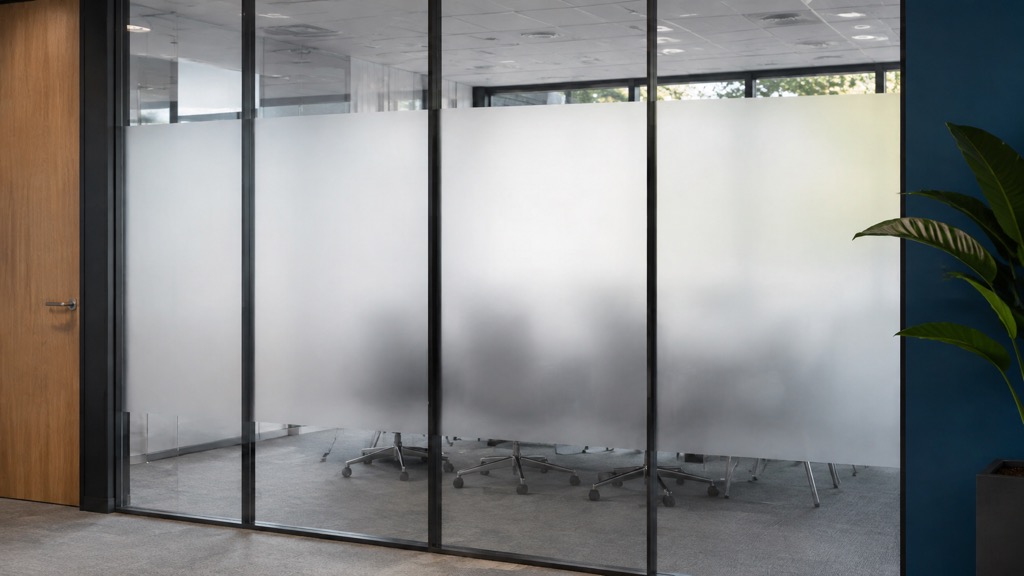
Frosted sticky back plastic has a place, particularly for a short-term need such as screening a window during a fit-out or covering glass temporarily before a permanent solution is fitted. The trade-off is durability and finish quality, since it is designed as a general-purpose covering material rather than purpose-built for glazing. This page covers when it makes sense as a temporary option and when it is worth moving to a permanent commercial film instead, covered fully in our frosted window film guide. We supply permanent frosted film across Hertfordshire, Bedfordshire, Buckinghamshire, Cambridgeshire and London.
We look forward to hearing from you
When temporary makes sense, and when it does not
For a pop-up event, a short building phase, or covering glass for a matter of weeks, a temporary sticky back plastic solution is perfectly reasonable and inexpensive. For anything longer-term, particularly on glazing that gets cleaned regularly or is exposed to direct sun, the lower durability and less even finish of general-purpose film becomes a genuine downside, and a proper commercial film ends up being better value over its working life.
Ready when you are
Ready to move from a temporary fix to a permanent finish? Use the form above to tell us about the glass, or get a fixed estimate directly.
Get an EstimateCommon questions
This varies widely by product and exposure, but general-purpose film is usually noticeably shorter-lived than commercial window film.
It can work for a short-term need, but a commercial-grade film is the better choice for anything intended to last.
Yes, the temporary film is simply removed and the glass cleaned before permanent film is applied.
Lower-quality adhesive can leave residue, particularly after longer periods on the glass, which needs cleaning off before new film goes on.
Material cost is lower, but the finish and durability trade-off is usually noticeable, particularly on larger or more visible glazing.