
Building Identification Signage for Multi-Tenant Sites
Practical guidance from the team that surveys, makes and installs commercial signage. If you have a live project, we can help you choose the right route.
When several occupiers share one building, entrance signage has to do two jobs at once: give the building a clear identity from the road, and help visitors find the right tenant once they arrive. Getting the hierarchy right matters more than any single sign, since a building sign overloaded with every tenant’s name usually ends up unreadable from a moving car, while a directory board inside handles the detail visitors actually need once they are on foot. This guide covers how to plan that hierarchy properly. We work with landlords and managing agents on multi-tenant sites across Hertfordshire, Bedfordshire, Buckinghamshire, Cambridgeshire and London to plan signage schemes that hold up as tenants change.
We look forward to hearing from you
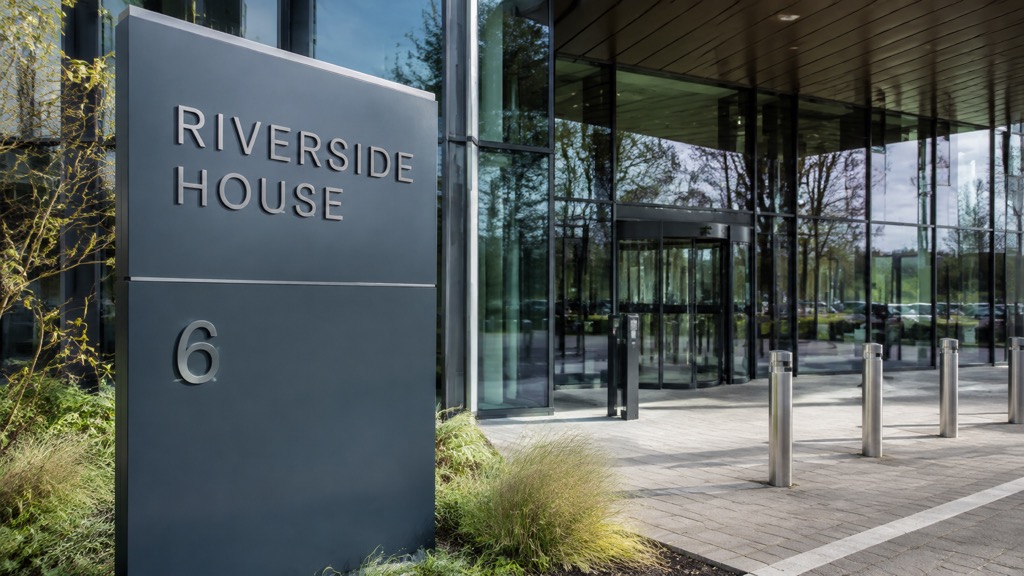
The building identity (name and address) usually sits at the primary entrance or on a totem, while individual tenant identification is handled separately, often through a directory board just inside reception.
Planning the hierarchy
The building identity (name and address) usually sits at the primary entrance or on a totem, while individual tenant identification is handled separately, often through a directory board just inside reception. Trying to fit every tenant's name onto the main building sign usually makes it harder to read from the road, not easier.
Ready when you are
Managing signage for a multi-tenant building? Use the form above to tell us about the site, or get a fixed estimate directly.
Get an EstimateCommon questions
Yes, if planned with a modular panel system from the outset, so a change of occupier does not mean remaking the whole sign.
Usually covered by deemed consent if non-illuminated and reasonably sized, but this varies by site and council.
Generally no; keeping the building identity sign simple and handling tenant detail on a separate directory board keeps both readable.
Yes, and this is worth considering for buildings with evening visitors such as gyms, clinics or restaurants within a mixed-use site.
This varies by lease arrangement, often falling to the landlord or managing agent as part of the building's common areas.