
Frosted Vinyl Window Film: How It Is Made and Applied
Practical guidance from the team that surveys, makes and installs commercial signage. If you have a live project, we can help you choose the right route.
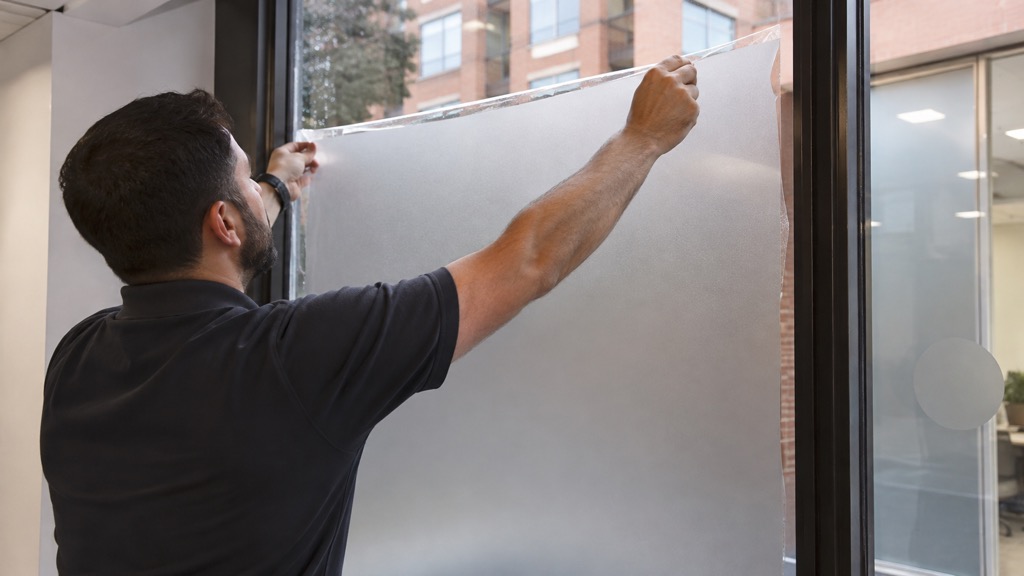
Frosted vinyl window film is built from a few distinct layers working together: a base PVC film, a textured or etched surface treatment that creates the frosted effect, and an adhesive backing that bonds it to the glass. Understanding what is actually in the film helps explain why some options cost more than others and why not every film suits every type of glass. This page covers the construction and the two main adhesive types available. Our frosted window film guide covers pricing and use cases in full. We supply and fit frosted vinyl window film across Hertfordshire, Bedfordshire, Buckinghamshire, Cambridgeshire and London.
We look forward to hearing from you
Adhesive-backed versus static-cling film
Adhesive-backed film bonds permanently to the glass using a pressure-sensitive adhesive layer, giving the most durable, long-term finish, which suits most commercial installations. Static-cling film uses no adhesive at all, instead clinging to the glass through static charge, which makes it easier to reposition or remove but generally less durable and more prone to lifting at the edges over time. For a permanent commercial fit, adhesive-backed film is almost always the better choice.
Ready when you are
Want the right film specified for your glass, not just any frosted film? Use the form above to tell us about the project, or get a fixed estimate directly.
Get an EstimateCommon questions
Adhesive-backed film generally lasts considerably longer than static-cling film, which is better suited to temporary or short-term use.
It can sometimes be reapplied, though its cling weakens with each removal and it is generally treated as a temporary solution.
This depends on the tint film already applied, which is why we check existing glazing during survey before recommending a product.
It requires more care than static-cling film, but professionally applied adhesive film still removes cleanly from most glass.
Durability requirements and the level of handling the glass will see, such as a high-traffic partition versus a rarely-touched window.