
Printed Frosted Vinyl: Custom Designs on Frosted Glass
Practical guidance from the team that surveys, makes and installs commercial signage. If you have a live project, we can help you choose the right route.
Printed frosted vinyl takes the plain, uniform look of standard frosting and adds a printed design directly onto the film, whether that is a graduated tint, a repeating pattern, or full-colour artwork. It gives more creative control than a cut vinyl logo alone, since colour and gradient are both possible rather than just a flat cut shape. This page covers where printed frosted vinyl works well and how it differs from plain frosting or cut vinyl. Our frosted window film guide covers the simpler plain options in more depth. We design and produce printed frosted vinyl for businesses across Hertfordshire, Bedfordshire, Buckinghamshire, Cambridgeshire and London.
We look forward to hearing from you
What printed frosted vinyl adds over plain frosting
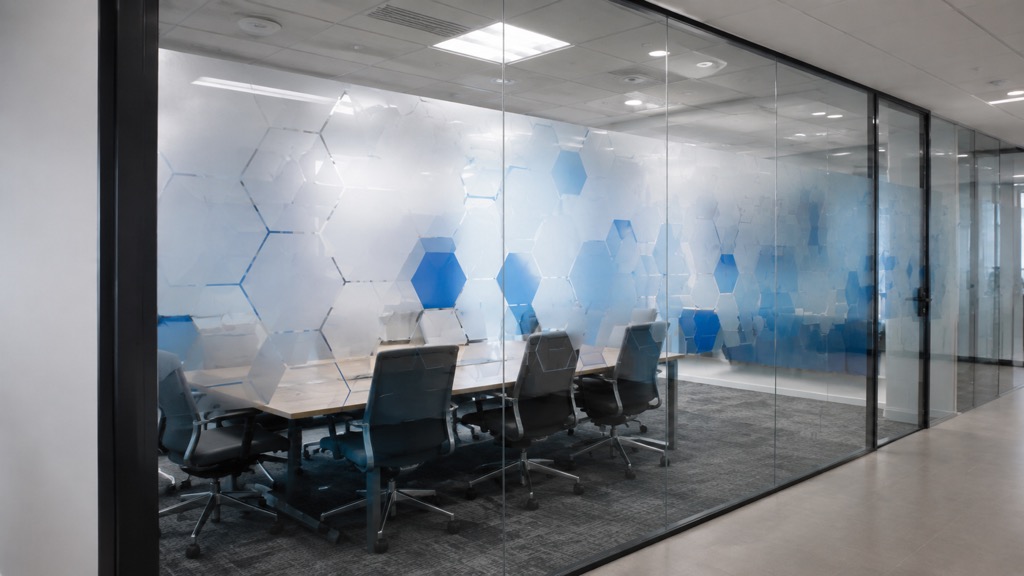
Plain frosted film gives one uniform texture and privacy level across the whole panel. Printing onto frosted film allows a graduated fade from clear to frosted, a repeating brand pattern, or full-colour artwork sitting on top of the frosted base, all in one piece of film rather than layering multiple materials. This suits reception glazing and branded meeting rooms particularly well, where the glass is as much a design feature as a privacy measure.
Ready when you are
Want more than a plain frosted panel? Use the form above to tell us about your design idea, or get a fixed estimate directly.
Get an EstimateCommon questions
Yes, digital printing allows full colour and photographic detail on top of the frosted base film.
This depends on the design; a dense, full-coverage print gives similar privacy to plain frosting, while a light pattern gives less.
This depends on design complexity, but printed film generally takes a little longer than plain frosted film due to the additional production step.
In most cases the existing film would need removing and replacing with a new printed panel, rather than printing directly onto film already installed.
Generally yes, due to the additional printing process, though the exact difference depends on design and area.